


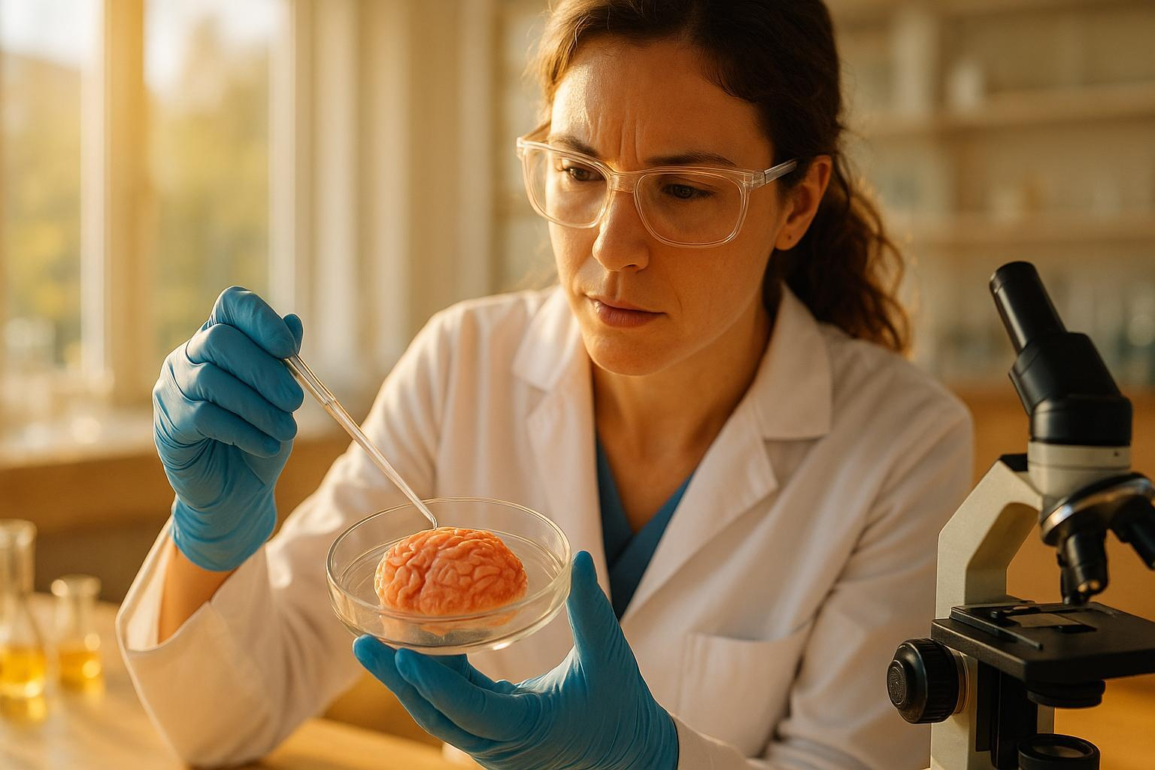
Scientists are making significant strides toward an unprecedented milestone in biotechnology: growing a fully functional brain in a laboratory dish. Recent advances in stem cell research and bioengineering have brought researchers closer than ever to replicating the complex architecture and neural activity of the human brain outside the body. This breakthrough holds profound implications for understanding neurological diseases, testing pharmaceuticals, and exploring the intricacies of brain development, marking a potential revolution in both medical science and ethical discourse.
Table of Contents
- Advancements in Neural Organoid Technology Transform Brain Research
- Challenges in Replicating Complex Brain Functions in Laboratory Conditions
- Ethical Considerations Surrounding Brain Tissue Growth in vitro
- Recommendations for Regulatory Frameworks and Collaborative Research Efforts
- Q&A
- Key Takeaways
Advancements in Neural Organoid Technology Transform Brain Research
Recent breakthroughs in neural organoid technology are revolutionizing the way scientists model the human brain, offering unprecedented insights into its developmental processes and disorders. By cultivating three-dimensional, miniaturized brain-like structures from stem cells, researchers can now observe cellular interactions and network formations with remarkable precision. This advancement not only bridges critical gaps between in vitro experiments and in vivo brain function but also enables the study of complex neurological diseases in a controlled environment.
Key benefits driving this innovation include:
- Enhanced mimicry of human brain architecture and physiology
- Personalized medicine applications through patient-derived organoids
- Reduction in reliance on animal models for neuropharmacological testing
- Accelerated discovery of therapeutic targets for brain disorders
| Aspect | Traditional Models | Neural Organoids |
|---|---|---|
| Complexity | Limited 2D cultures | 3D cellular networks |
| Human Relevance | Indirect in vivo approximations | Direct human cell-based models |
| Scalability | Variable, resource-intensive | Standardizable cell growth |
Challenges in Replicating Complex Brain Functions in Laboratory Conditions
Replicating the intricate dynamics of the human brain outside of its natural environment poses an array of formidable challenges. One core difficulty lies in mimicking the brain’s highly specialized cell diversity, with over 100 billion neurons that each perform unique functions. Laboratory-grown brain models, or organoids, require precise biochemical environments and temporal cues to differentiate stem cells accurately. Even slight deviations in these factors can lead to incomplete or non-functional tissue development. Moreover, the brain’s complex architecture—characterized by layered structures and elaborate neuronal networks—is notoriously difficult to replicate, resulting in organoids that often lack the spatial organization critical for proper function.
Beyond cellular and structural hurdles, scientists grapple with reproducing the brain’s electrochemical communication and its interactions with other bodily systems. The absence of blood vessels in the lab-grown tissues severely limits nutrient transport and waste removal, impairing long-term viability and maturation. Additionally, replicating the brain’s dynamic responses to external stimuli remains elusive due to the lack of sensory input and systemic feedback loops. Researchers are actively exploring solutions including:
- Integration of microfluidic systems to simulate blood flow and nutrient delivery
- Advanced bioengineering techniques to promote vascularization
- Incorporation of synthetic scaffolds that guide layered tissue formation
- Use of electrical stimulation to mimic neural activity patterns
| Challenge | Impact on Brain Organoids | Current Approach |
|---|---|---|
| Lack of Vascularization | Limits growth and lifespan | Microfluidic perfusion systems |
| Neuronal Network Formation | Impaired signal processing | Synthetic scaffolds and guided differentiation |
| Cell Type Diversity | Incomplete functionality | Tailored growth factors and timing adjustments |
Ethical Considerations Surrounding Brain Tissue Growth in vitro
As the ability to cultivate brain tissue outside the human body advances, questions about moral boundaries intensify. The possibility of developing clusters of neurons that mimic aspects of human cognition sparks debates on consent, sentience, and the responsibility of researchers. For example, when brain organoids reach a certain level of complexity, can they experience pain or possess minimal consciousness? Such inquiries challenge the existing frameworks guiding scientific research and demand new ethical guidelines.
To address these concerns, experts suggest a multidisciplinary approach, incorporating insights from neuroscience, philosophy, and law. Key points under consideration include:
- Defining the threshold for neural activity that would confer moral status.
- Establishing oversight committees to monitor experiments involving brain tissue.
- Ensuring transparency in research objectives and methodologies.
- Balancing innovation with respect for potential life-like qualities.
| Ethical Concern | Implications | Proposed Solutions |
|---|---|---|
| Sentience | Potential for suffering or awareness | Regular neural activity assessments |
| Consent | Use of donor tissues raises questions | Enhanced informed consent protocols |
| Research Boundaries | Risk of crossing moral lines unknowingly | Clear regulatory frameworks |
Recommendations for Regulatory Frameworks and Collaborative Research Efforts
As advancements in neural organoid development accelerate, crafting robust and adaptive regulatory frameworks is paramount. Policies must not only safeguard ethical considerations, such as consent and the potential emergence of consciousness, but also promote transparency and accountability throughout research stages. This includes standardized reporting protocols, oversight committees composed of interdisciplinary experts, and clear guidelines on the permissible extent of brain-like tissue complexity.
Equally critical is fostering global collaboration across scientific institutions to combine expertise, share data, and harmonize practices. Initiatives such as international consortiums and public-private partnerships can spur innovation while mitigating duplication of efforts. The table below outlines key collaborative mechanisms and recommended regulatory actions to accelerate responsible breakthroughs.
| Collaborative Mechanism | Regulatory Action | Expected Impact |
|---|---|---|
| Global Bioethics Consortium | Develop universal ethical standards | Ensure consistent moral guidelines |
| Data-Sharing Platforms | Implement secure research databases | Accelerate knowledge dissemination |
| Interdisciplinary Advisory Boards | Oversee experimental protocols | Prevent unethical experimentation |
| Funding Incentives | Support compliance with regulations | Encourage responsible innovation |
Q&A
Q&A: We’re Getting Closer to Growing a Brain in a Lab Dish
Q: What recent advancements have brought scientists closer to growing a brain in a lab dish?
A: Researchers have made significant progress in cultivating cerebral organoids—miniature, simplified brain-like structures—from stem cells. Advances in stem cell technology, bioengineering, and 3D culturing techniques have enabled these organoids to develop increasingly complex structures that mimic certain aspects of early brain development.
Q: What are cerebral organoids, and how do they relate to growing a brain in the lab?
A: Cerebral organoids are three-dimensional clusters of brain cells that self-organize in vitro to replicate some anatomical and functional features of the human brain. While not full brains, they offer a scalable model to study brain formation, neural connectivity, and disease mechanisms in a controlled laboratory environment.
Q: How close are scientists to growing a fully functional human brain in vitro?
A: Despite rapid advancements, researchers have not yet created a fully functional human brain in the lab. Current cerebral organoids can simulate early developmental stages and demonstrate neural activity but lack the full complexity, organization, and size of an adult brain.
Q: What potential applications could arise from successfully growing brain tissue in the lab?
A: Cultivating brain tissue in vitro could revolutionize neuroscience research, allowing for better understanding of neurodevelopmental disorders, neurodegenerative diseases, and brain injuries. It may also facilitate personalized medicine through patient-specific models and accelerate drug discovery by providing more accurate testing platforms.
Q: Are there ethical concerns associated with growing brain tissue or organoids?
A: Yes, the prospect of creating brain-like structures raises ethical questions regarding consciousness, sentience, and the moral status of organoids. Ethical frameworks are being developed to address concerns about the extent of neural development and potential experiences in lab-grown brain tissue.
Q: What challenges remain before lab-grown brain models can be widely used?
A: Key challenges include improving vascularization to support larger and more mature organoids, enhancing cellular diversity and architecture, and developing standardized protocols to ensure reproducibility. Additionally, interpreting the complex data generated by these models requires further technological and analytical advances.
Q: How might this research impact our understanding of human brain development and disease?
A: Lab-grown brain models provide unprecedented insight into human brain formation and the mechanisms underlying neurological conditions. They allow scientists to observe processes otherwise inaccessible in living humans, potentially leading to novel therapeutic strategies and preventive measures for brain disorders.
Key Takeaways
As research advances, the prospect of growing functional brain tissue in the lab moves from science fiction toward scientific reality. While significant ethical and technical challenges remain, these developments hold promise for transformative breakthroughs in understanding neurological diseases, testing new therapies, and unraveling the complexities of human brain development. Continued multidisciplinary collaboration and rigorous oversight will be essential as this frontier unfolds, ensuring that innovation proceeds with both scientific integrity and societal responsibility.