


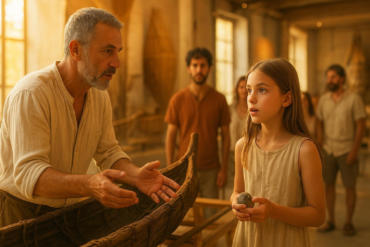
New archaeological discoveries are rewriting the timeline of human maritime activity, revealing that ancient humans were seafaring far earlier than previously believed. Recent evidence suggests that our ancestors ventured across significant bodies of water tens of thousands of years ago, challenging long-held assumptions about the origins of seafaring and maritime technology. This development not only sheds light on the capabilities of early humans but also has profound implications for understanding migration patterns, cultural exchange, and the spread of human populations across the globe.
Table of Contents
- Early Maritime Innovations Rewrite Human Migration History
- Archaeological Discoveries Uncover Ancient Seafaring Technologies
- Implications for Understanding Cultural and Genetic Exchanges
- Recommendations for Future Research on Prehistoric Ocean Travel
- Q&A
- The Way Forward
Early Maritime Innovations Rewrite Human Migration History
Archaeological discoveries increasingly suggest that early humans developed seafaring capabilities far earlier than previously believed, challenging established timelines of migration and cultural exchange. These innovations likely included rudimentary boat-building and navigation techniques, enabling our ancestors to traverse significant bodies of water and colonize remote islands. Such advances underscore a level of ingenuity and adaptability that redefines the scope of early human exploration.
Significant findings, such as ancient tools and coastal settlements dated tens of thousands of years ago, hint at deliberate maritime activity. Key features of these early seafaring endeavors include:
- Primitive rafts and dugouts made from natural materials like wood and reeds
- Use of ocean currents and wind patterns for route optimization
- Development of fishing and water-based subsistence skills, reflecting a shift toward aquatic resource utilization
| Region | Estimated Date (Years Ago) | Key Maritime Evidence |
|---|---|---|
| Indonesia (Flores) | 60,000+ | Stone tools on isolated islands |
| Australia (Northern Coast) | 50,000+ | Cut-marked marine shells and habitation sites |
| Philippines | 67,000+ | Human remains on isolated islands |
Archaeological Discoveries Uncover Ancient Seafaring Technologies
Recent excavations at coastal sites worldwide have revealed sophisticated tools and remnants that challenge long-held assumptions about early human maritime capabilities. Among these treasures are intricately crafted harpoons and reed-based flotation devices, suggesting that ancient communities mastered not only the basics of river navigation but also the complexities of oceanic travel. Such innovations imply a refined understanding of materials science and hydrodynamics far earlier than previously documented.
Key findings include:
- Advanced woodworking techniques for constructing durable vessels
- Evidence of early navigational aids, like primitive compasses and star charts
- Use of natural adhesives and waterproofing methods to seal boats
| Artifact | Estimated Age | Technological Insight |
|---|---|---|
| Bone Harpoon | 85,000 years | Complex hunting strategies at sea |
| Bamboo Raft Remains | 75,000 years | Early buoyancy and vessel construction |
| Star Navigation Markings | 70,000 years | Celestial guidance techniques for open water |
Implications for Understanding Cultural and Genetic Exchanges
This revelation reshapes our understanding of prehistoric interactions, indicating that early humans were not isolated but actively engaged in complex networks of exchange across vast maritime landscapes. These exchanges went beyond mere survival; they facilitated the transmission of ideas, technologies, and cultural practices between distant island communities and continental populations. Archaeological findings such as shared tool styles, symbolic artifacts, and dietary remains suggest that seafaring enabled significant cultural blending, laying the groundwork for the rich heterogeneity observed in ancient human societies.
Genetically, the implications are equally profound. The movement of seafaring groups fostered gene flow between populations previously considered separate, creating diverse genetic lineages that contributed to the adaptive success of modern humans. This can be summarized as follows:
- Enhanced genetic diversity through inter-island mating and population mixing.
- Rapid spread of advantageous traits facilitating adaptation to new environments.
- Complex population structures challenging conventional migration models.
| Aspect | Before Seafaring | After Seafaring |
|---|---|---|
| Cultural Exchange | Localized and limited | Extensive and interconnected |
| Genetic Diversity | Isolated gene pools | Significant admixture |
| Technological Spread | Slow, region-specific | Fast, trans-regional |
Recommendations for Future Research on Prehistoric Ocean Travel
Unlocking the full scope of ancient maritime capabilities demands a multidisciplinary approach that integrates archaeology, marine geology, and genetics. Future investigations should focus on underwater archaeological sites, employing advanced technologies such as LiDAR scanning and submersible drones to map submerged landscapes and ancient coastal settlements. Collaboration with local indigenous communities can also uncover oral histories that may guide researchers to previously overlooked evidence of seafaring practices.
To accelerate understanding, scholars might prioritize the following areas:
- Experimental archaeology to reconstruct and test prehistoric watercraft designs under varied oceanic conditions
- Isotopic analysis on skeletal remains to trace the residence and migratory patterns of early coastal populations
- Comparative studies of maritime adaptations across different global regions to identify convergent evolution in seafaring technology
| Research Focus | Expected Insights | Methods |
|---|---|---|
| Submerged settlements | Evidence of early coastal habitation | Sonar mapping, underwater excavation |
| Watercraft reconstructions | Functionality and design validation | Experimental builds, ocean trials |
| Genetic studies | Patterns of migration and inter-island contact | DNA sequencing, isotopic data |
Q&A
Q&A: Ancient Humans Were Seafaring Far Earlier Than We Realised
Q: What is the key discovery regarding ancient humans and seafaring?
A: New archaeological evidence suggests that ancient humans engaged in seafaring activities much earlier than previously believed. This challenges earlier timelines that underestimated the seafaring capabilities of early Homo sapiens.
Q: How much earlier were ancient humans seafaring?
A: Recent findings indicate that ancient humans were seafaring tens of thousands of years earlier than traditional estimates, with some evidence pointing to maritime travel over 50,000 years ago.
Q: What types of evidence have researchers found to support this?
A: Researchers have uncovered ancient tools, remnants of boats or watercraft, and island habitation sites that could only have been reached by crossing open water. Additionally, genetic studies support early human migration routes involving sea travel.
Q: Which regions have yielded these significant findings?
A: Key discoveries come from coastal East Asia, Southeast Asia, and parts of the Mediterranean, areas where early humans likely used simple watercraft to navigate between islands and across coastal waters.
Q: Why is this discovery important for understanding human evolution?
A: The early adoption of seafaring shows advanced cognitive and technological skills in early humans, indicating complex planning, tool use, and social organization. This evidence also reshapes our understanding of human migration and the settlement of remote islands.
Q: How might this change our perception of ancient human capabilities?
A: It suggests that ancient humans were more innovative and adaptable than traditionally portrayed. Their ability to build and use watercraft implies a higher level of problem-solving and interaction with diverse environments.
Q: What further research is needed?
A: Ongoing excavations, improved dating techniques, and interdisciplinary studies combining archaeology, genetics, and marine science are essential to fully understand the scope and impact of early seafaring on human history.
Q: Where can the public learn more about these discoveries?
A: Detailed reports are available in recent academic publications and coverage by scientific news outlets. Museums and universities involved in the research also often provide public lectures and exhibitions.
The Way Forward
The discovery that ancient humans were seafaring far earlier than previously believed reshapes our understanding of early human migration and innovation. As new archaeological evidence continues to emerge, it highlights the sophistication and adaptability of our ancestors in navigating vast bodies of water. This breakthrough not only challenges long-held assumptions but also opens fresh avenues for research into the origins and spread of human civilizations across the globe.