

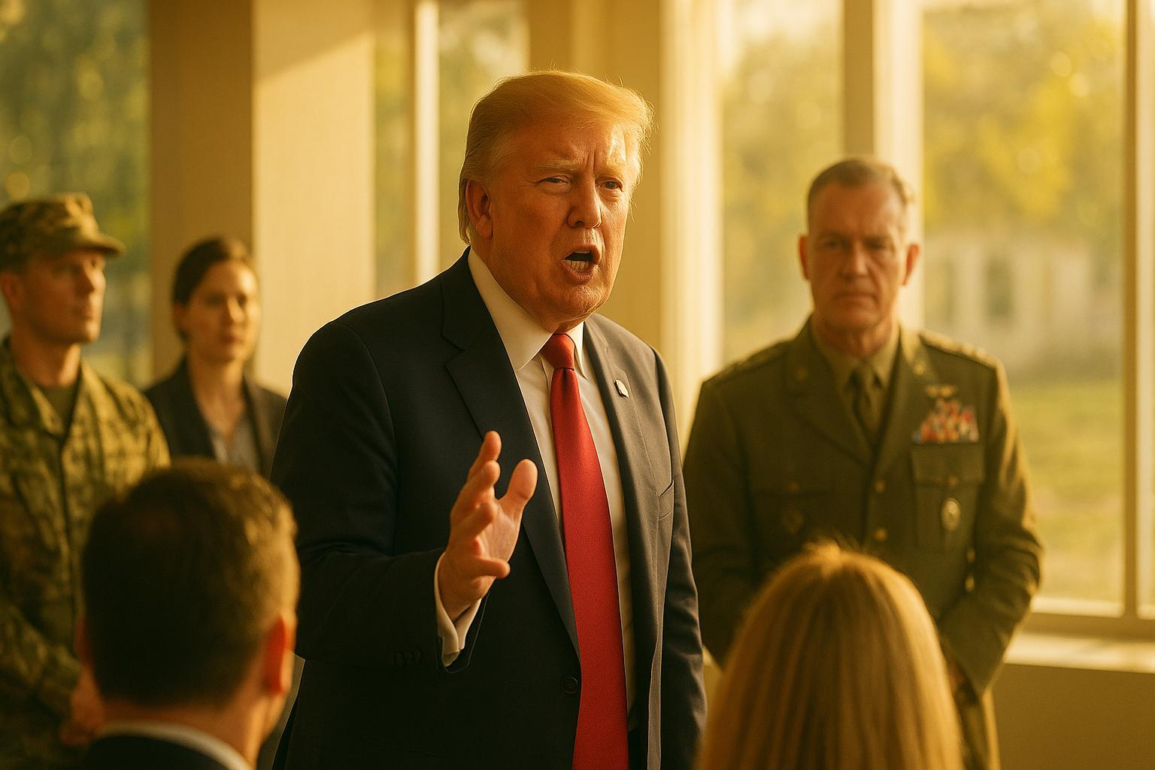
Former President Donald Trump‘s perspectives on war have been a significant point of analysis for political observers and international relations experts alike. Throughout his tenure and beyond, Trump’s views have influenced U.S. foreign policy decisions and shaped global diplomatic dynamics. This article examines how Trump approaches the concept of war, highlighting his rhetoric, strategic considerations, and the broader implications of his stance on international conflict.
Table of Contents
- Understanding Trump’s Strategic Approach to Military Engagement
- Analyzing Trump’s Emphasis on Economic Impacts of War
- Evaluating Trump’s Stance on Diplomacy Versus Direct Conflict
- Recommendations for Policymakers Navigating Trump’s War Policies
- Q&A
- In Summary
Understanding Trump’s Strategic Approach to Military Engagement
Donald Trump’s military strategy reflects a pragmatic blend of assertiveness and caution, emphasizing measurable outcomes over prolonged conflicts. His approach often highlights the need for clear objectives and an aversion to entanglements that don’t directly serve national interests. Trump prioritizes overwhelming force as a deterrent, frequently underscoring the importance of showcasing military strength to reduce the likelihood of engagement. Additionally, his stance on military spending centers on modernization and ensuring American forces maintain technological superiority.
- Decisive action: Rapid, overwhelming force to end conflicts swiftly
- Cost scrutiny: Skepticism of wars with ambiguous financial and human costs
- Strategic partnerships: Expecting allies to contribute more to collective defense
- Focus on innovation: Investing in cutting-edge military technology and cyber capabilities
| Aspect | Trump’s Approach |
|---|---|
| Engagement Duration | Prefer short, decisive campaigns |
| Military Budget | Increase with focus on modernization |
| Alliances | Demand fairer burden-sharing |
| War Objective | Clear, achievable goals |
Analyzing Trump’s Emphasis on Economic Impacts of War
Trump’s perspective on war is deeply intertwined with its economic consequences. He consistently highlights how military conflicts can deplete national resources, strain budgets, and stifle economic growth. For Trump, every decision on war is framed through the lens of fiscal responsibility and long-term economic stability. His rhetoric often criticizes prolonged military engagements that do not yield immediate economic or strategic benefits, arguing that such wars burden American taxpayers disproportionately. This viewpoint prioritizes an America-first economic stance, focusing on strengthening domestic industries and job creation over extended foreign involvements.
One notable aspect of Trump’s emphasis is his focus on the disruption caused by war to global trade and markets. He believes that instability overseas can lead to volatility in commodity prices, including oil, which directly impacts consumer costs at home. The following table outlines some economic variables Trump has referenced in relation to the costs of war:
| Economic Factor | Impact of War |
|---|---|
| Federal Deficit | Increases substantially due to military spending |
| Job Market | Short-term boosts in defense sectors; long-term instability overall |
| Consumer Prices | Rise with disruptions in energy supplies |
| Trade Balance | Negative impact from interrupted supply chains |
- Cost Efficiency: Advocates for using military power selectively to avoid undue economic drain.
- Focus on Trade: Stresses safeguarding trade routes and economic interests abroad to maintain U.S. economic dominance.
- Domestic Priorities: Encourages redirecting funds towards infrastructure and workforce development instead of prolonged conflicts.
Evaluating Trump’s Stance on Diplomacy Versus Direct Conflict
Donald Trump’s approach to international relations reveals a complex calculus between diplomacy and direct conflict, shaped by his “America First” doctrine. His tenure illustrated a preference for transactional diplomacy — leveraging economic and military might to extract concessions rather than relying on traditional multilateral frameworks. Trump often expressed skepticism towards prolonged military engagements, yet he did not shy away from deploying force when he perceived clear national interests at stake. This resulted in a pattern where diplomacy was pursued primarily as a tool to avoid conflict but could rapidly give way to aggressive posturing if negotiations stalled.
Key characteristics of Trump’s stance include:
- Negotiations backed by intimidation: Using the threat of military action or economic sanctions as leverage.
- Selective engagement: Emphasizing bilateral deals over alliances, leading to unpredictable commitments.
- Quick shifts in strategy: Willingness to pivot between talk and threats without prolonged deliberation.
| Aspect | Diplomacy | Direct Conflict |
|---|---|---|
| Approach | Transactional & results-driven | Targeted & strategic |
| Goal | Concessions & economic gain | Deterrence & swift resolution |
| Risks | Alienating allies | Escalation & unpredictability |
Recommendations for Policymakers Navigating Trump’s War Policies
Policymakers must critically assess the implications of unilateral actions and the prioritization of national interests that defined the former administration’s approach to conflict. Emphasizing strategic alliances and multilateral cooperation can mitigate risks of isolation and unpredictable escalations. Prioritizing diplomatic channels over military interventions helps secure sustainable outcomes, reducing human and economic costs. Furthermore, transparency regarding justifications for war or troop deployments fosters public trust and accountability.
Key considerations moving forward include:
- Enhancing congressional oversight to balance executive military prerogatives
- Fostering dialogue with traditional and emerging international partners to create robust coalitions
- Integrating long-term nation-building strategies to prevent power vacuums and instability post-conflict
- Investing in intelligence and technology to reduce reliance on ground forces and minimize collateral damage
| Policy Area | Recommended Action | Expected Outcome |
|---|---|---|
| Military Engagement | Mandate bipartisan review | Checks and balances |
| Alliance Management | Promote multilateral agreements | Strengthened global trust |
| Conflict Resolution | Invest in diplomatic corps | Reduced armed conflict |
| Defense Spending | Prioritize tech innovation | Minimized troop exposure |
Q&A
Q&A: How Trump Views War
Q: What is the core of Donald Trump’s perspective on war?
A: Donald Trump’s approach to war is notably pragmatic and transactional. He emphasizes avoiding prolonged military engagements and stresses America’s need to prioritize national interests and economic benefits.
Q: How does Trump view America’s involvement in overseas conflicts?
A: Trump is generally critical of extended U.S. involvement in foreign wars. He advocates for a more restrained foreign policy, focusing on reducing troop deployments abroad and avoiding what he terms “endless wars”.
Q: What is Trump’s stance on military spending in relation to war?
A: Trump supports maintaining a strong and well-funded military as a deterrent but insists that defense expenditures must be tied to clear outcomes and accountability. He has called for allies to share a greater financial burden for collective security.
Q: Has Trump’s view on war influenced U.S. foreign policy during his administration?
A: Yes. During his presidency, Trump pursued policies aimed at withdrawing troops from conflict zones like Syria and Afghanistan, and he pushed for diplomatic negotiations over military interventions.
Q: How does Trump perceive the role of diplomacy versus military action?
A: Trump favors negotiation and deal-making to resolve conflicts and has highlighted his personal diplomacy with adversarial leaders as a preferred alternative to conventional warfare.
Q: What criticism has Trump faced regarding his war policies?
A: Critics argue that Trump’s approach can be unpredictable and that his transactional view of alliances may undermine long-term strategic partnerships. Some also contend that his reluctance to engage militarily could embolden adversaries.
Q: In summary, how might one characterize Trump’s view on war?
A: Trump’s view on war is characterized by a focus on nationalist interests, skepticism toward prolonged military commitments, and a preference for negotiation backed by military strength.
In Summary
In summary, Donald Trump’s perspective on war reflects a complex blend of pragmatic skepticism and assertive nationalism. While often emphasizing the need to avoid prolonged military engagements, his approach underscores a preference for leveraging American strength to secure national interests decisively. As tensions continue to shape global geopolitics, understanding Trump’s stance offers valuable insight into the broader discourse on U.S. foreign policy and its future direction.